

Introduction
If your plumbing website gets traffic but very few phone calls, the problem is usually not demand. In most cases, potential customers are visiting your site and leaving without taking action.
Many plumbing companies invest in SEO, Google Ads, or social media only to discover that their website is the weak link in the customer journey. A website should do more than look professional. It should convince visitors to trust your business and make contacting you the obvious next step.
In this guide, you’ll learn the most common reasons a plumbing website fails to generate leads and how to fix them.
What Makes a Plumbing Website High-Converting?
A high-converting plumbing website attracts local visitors, builds trust quickly, answers common questions, and makes it easy to call or request service. When any of these elements are missing, conversion rates suffer.
1. Your Website Doesn’t Clearly Explain What You Do
Visitors should immediately know what services you offer, where you operate, and why they should choose you.
Why it matters: This directly impacts lead generation and user experience.
Implementation tip: Review the page from a customer’s perspective and remove friction from the buying journey.
2. Your Call-to-Action Is Weak or Hard to Find
Place clear calls-to-action throughout the website, especially above the fold and on service pages.
Why it matters: This directly impacts lead generation and user experience.
Implementation tip: Review the page from a customer’s perspective and remove friction from the buying journey.
3. Your Website Isn’t Mobile-Friendly
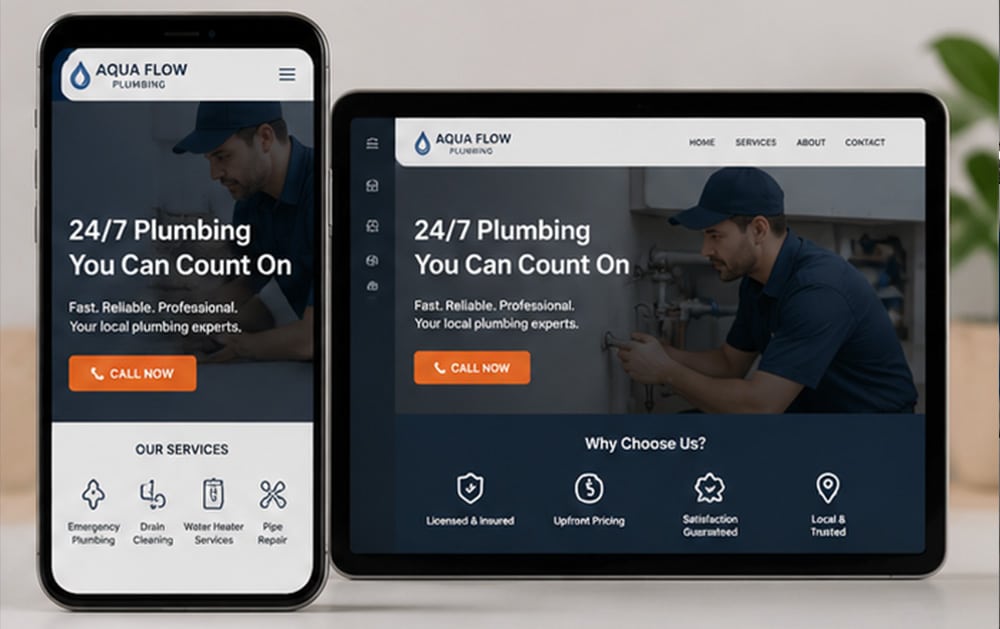
Most plumbing searches happen on mobile devices. Fast loading and click-to-call functionality are essential.
Why it matters: This directly impacts lead generation and user experience.
Implementation tip: Review the page from a customer’s perspective and remove friction from the buying journey.
4. You Don’t Have Enough Trust Signals
Show reviews, licenses, certifications, and project photos to reduce buyer hesitation.
Why it matters: This directly impacts lead generation and user experience.
Implementation tip: Review the page from a customer’s perspective and remove friction from the buying journey.
5. Your Website Loads Too Slowly
Slow websites increase bounce rates and reduce leads.
Why it matters: This directly impacts lead generation and user experience.
Implementation tip: Review the page from a customer’s perspective and remove friction from the buying journey.
6. You’re Not Ranking for Local Searches
Strong local plumber SEO helps customers find you when they need service.
Why it matters: This directly impacts lead generation and user experience.
Implementation tip: Review the page from a customer’s perspective and remove friction from the buying journey.
7. Your Google Business Profile Is Incomplete
An optimized Google Business Profile improves visibility and trust.
Why it matters: This directly impacts lead generation and user experience.
Implementation tip: Review the page from a customer’s perspective and remove friction from the buying journey.
8. You Don’t Showcase Customer Reviews
Reviews often determine whether a prospect contacts you or a competitor.
Why it matters: This directly impacts lead generation and user experience.
Implementation tip: Review the page from a customer’s perspective and remove friction from the buying journey.
9. Your Contact Process Is Too Complicated
Short forms and visible phone numbers increase conversions.
Why it matters: This directly impacts lead generation and user experience.
Implementation tip: Review the page from a customer’s perspective and remove friction from the buying journey.
10. Your Messaging Focuses on You, Not the Customer
Lead with customer outcomes rather than company history.
Why it matters: This directly impacts lead generation and user experience.
Implementation tip: Review the page from a customer’s perspective and remove friction from the buying journey.
11. You Don’t Have Dedicated Service Pages
Dedicated pages help both SEO and conversions.
Why it matters: This directly impacts lead generation and user experience.
Implementation tip: Review the page from a customer’s perspective and remove friction from the buying journey.
12. You Aren’t Tracking Conversions
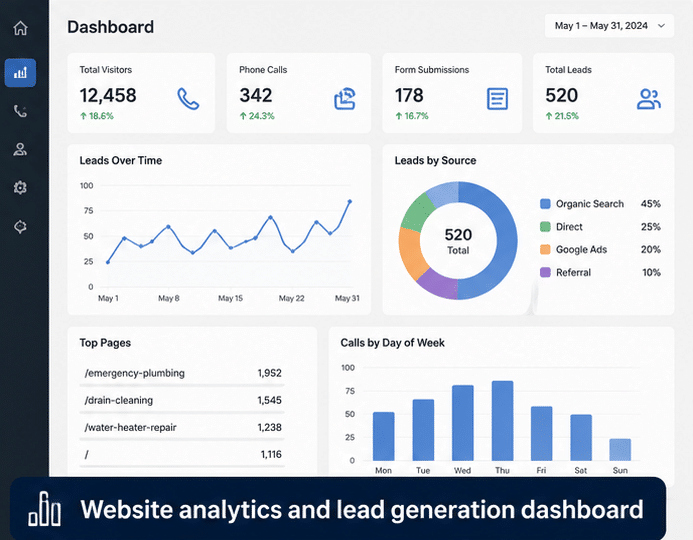
Track calls, forms, and user actions so you can improve performance.
Why it matters: This directly impacts lead generation and user experience.
Implementation tip: Review the page from a customer’s perspective and remove friction from the buying journey.
Common Plumbing Website Mistakes
Hidden phone numbers, weak calls-to-action, slow loading times, poor mobile experiences, lack of reviews, and weak local SEO are among the most common issues.
Need Help Fixing Your Plumbing Website?
If your website gets visitors but not enough calls, you may have a conversion problem rather than a traffic problem.
Uthman Adebayo is a conversion-focused website specialist who helps service businesses identify and fix the issues preventing visitors from becoming leads.
Book a consultation: 👉 https://bauthtech.com/book-appointment/
FAQ
Why is my plumbing website not generating calls?
Most often because of poor conversion optimization, weak trust signals, or poor visibility.
How do I get more calls from my plumbing website?
Improve CTAs, local SEO, page speed, and mobile usability.
Conclusion
The businesses that win online are not always those with the most traffic. They are the ones that convert visitors into customers effectively. By improving your website’s user experience, trust signals, local SEO, and calls-to-action, you can generate more calls and grow your plumbing business.


